
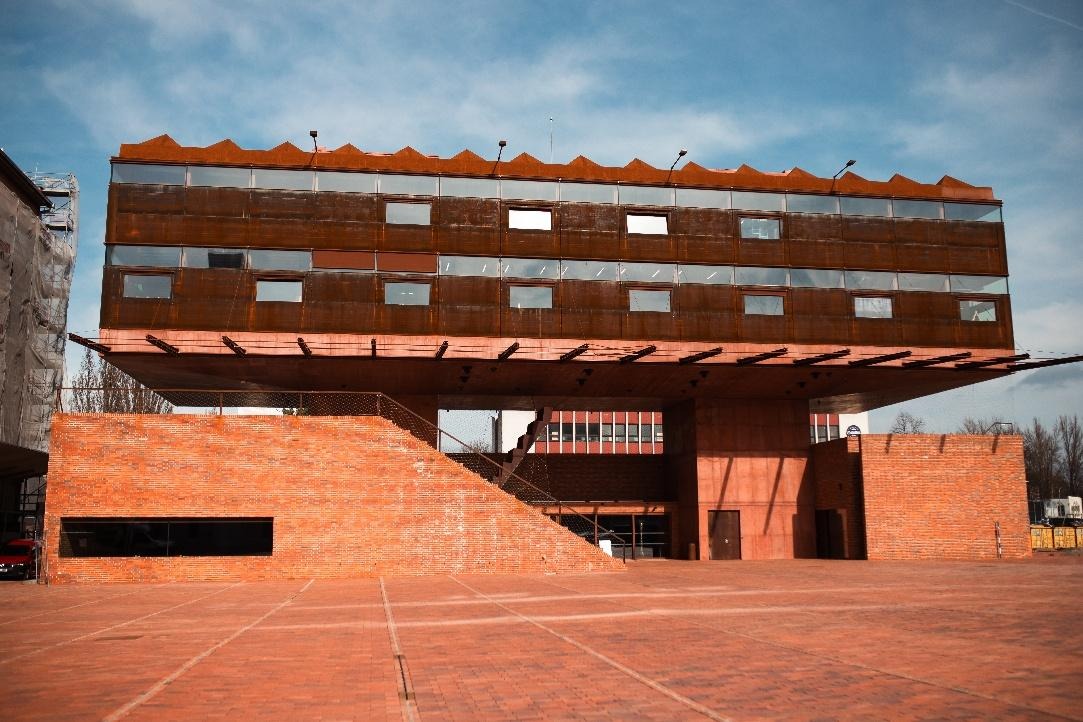
At SFÉRA, we are enthusiastic readers of the Czexpats in Science blog, where we learn about inspiring study and research journeys of Czech scientists abroad. This time, we would like to share our own European job-shadowing experience with you. By “our”, we mean that of the team from the new SFÉRA Education Centre in Pardubice. We opened in September 2023, and in January 2026 we set off for Copenhagen, Denmark.
Who are we?
SFÉRA arrived in the Czech Republic almost like an outsider. At the start was a bold idea by the statutory city of Pardubice to create a centre unlike any that had existed here before. A centre bringing together technology, science and crafts under one roof. A place visited by children, schools, teachers, enthusiasts and creative minds alike.
SFÉRA is located in the Automatické Mlýny (Automatic Mills in English) area, historically designed by the architect Gočár. The buildings share several distinctive features: brick, corten steel and the colour orange, and evoke an industrial past connected with a modern future.
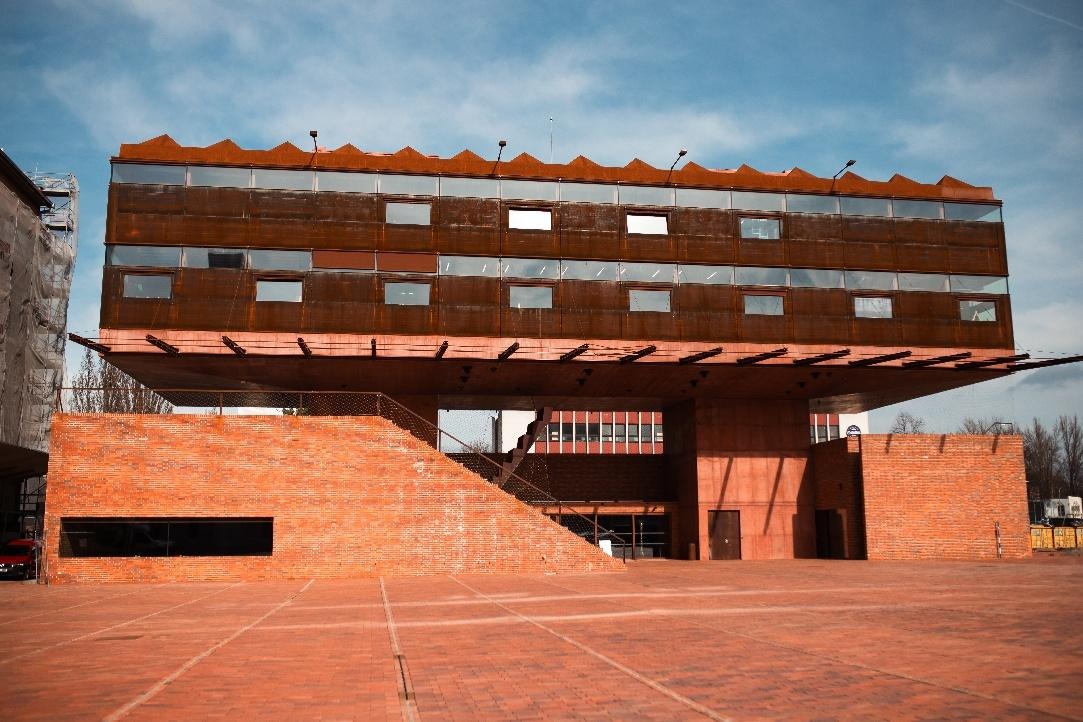
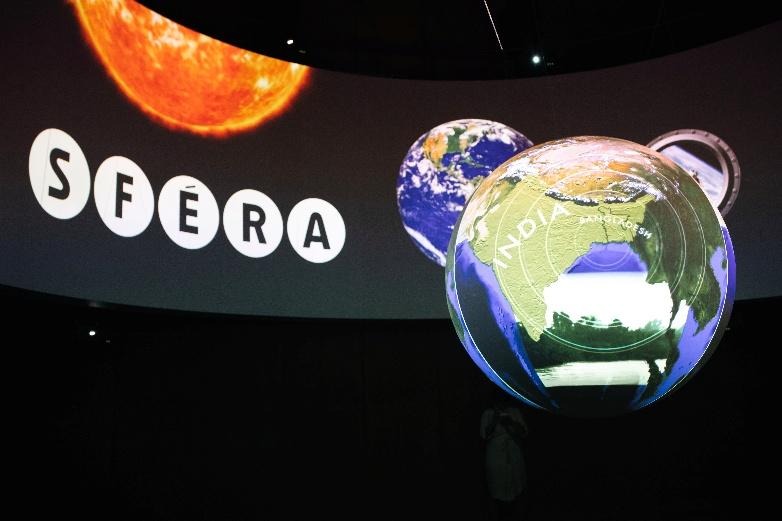
SFÉRA occupies two floors of a futuristic building that was created in the space of a former flour warehouse. On the fifth floor you will find laboratories for physics and robotics, chemistry, information technology, virtual reality and natural sciences. On the fourth floor, traditional crafts are given a modern twist: workshops dedicated to metal, electrical engineering, wood, textiles and graphic design. The space also includes the specially created Science on a Sphere installation: an American technology that vividly visualises the atmosphere and oceans and simulates events and surfaces of other planets, i.e. everything our world and the universe offer us. We must not forget the Spherical Playground, a didactic space where the youngest children playfully develop their skills and dexterity.
SFÉRA is unique in that it does not operate through traditional exhibition displays like most science centres. Every programme has its own dramaturgy, story and a person guiding visitors through the process. The emphasis is on the learning and exploration process itself.
SFÉRA is a member of the Czech Association of Science Centres. Nevertheless, we often feel that we have no example to copy from. We operate differently. We continuously design and refine processes, themes, teaching tools and precise time slots. This dynamic runs throughout the entire building because people, programmes, visitors, school groups, topics, and concentration are constantly changing, hour by hour.
When we were preparing for the opening in 2023, everything was created from scratch. Erasmus+ projects, however, were part of our strategic development from the very beginning. We know how important it is to see how things work elsewhere in the world and to draw inspiration from them. Today, around 70 employees work at SFÉRA in various roles and with different types of contracts. The construction and equipment of the centre were funded through European grants. Two thirds of the operational costs are covered by the City of Pardubice, while the remaining part comes from grants, sponsorship and SFÉRA’s own revenue.
Experimentarium in Copenhagen
So far, the SFÉRA team has visited similar organisations in Malta, Finland, Trento in Italy, and now Denmark. This time, the trip to Copenhagen included the coordinators of physics, natural sciences and the Spherical Playground together with the marketing/communications manager and the operations/events manager.
These trips are financed through Erasmus+ projects, specifically Short-term mobility projects for adult education (KA122-ADU). What we value about these trips is not only the professional inspiration and job shadowing at the host institution, but also the time spent together with colleagues whom we do not normally get to interact with as much during SFÉRA’s everyday operations.
The building of the Danish science centre Experimentarium has undergone a major renovation and is now iconic mainly for its enormous copper spiral in the entrance hall, its bright open spaces and the typically Danish combination of design and functionality. Yes, the copper colour is something we have in common. 🙂
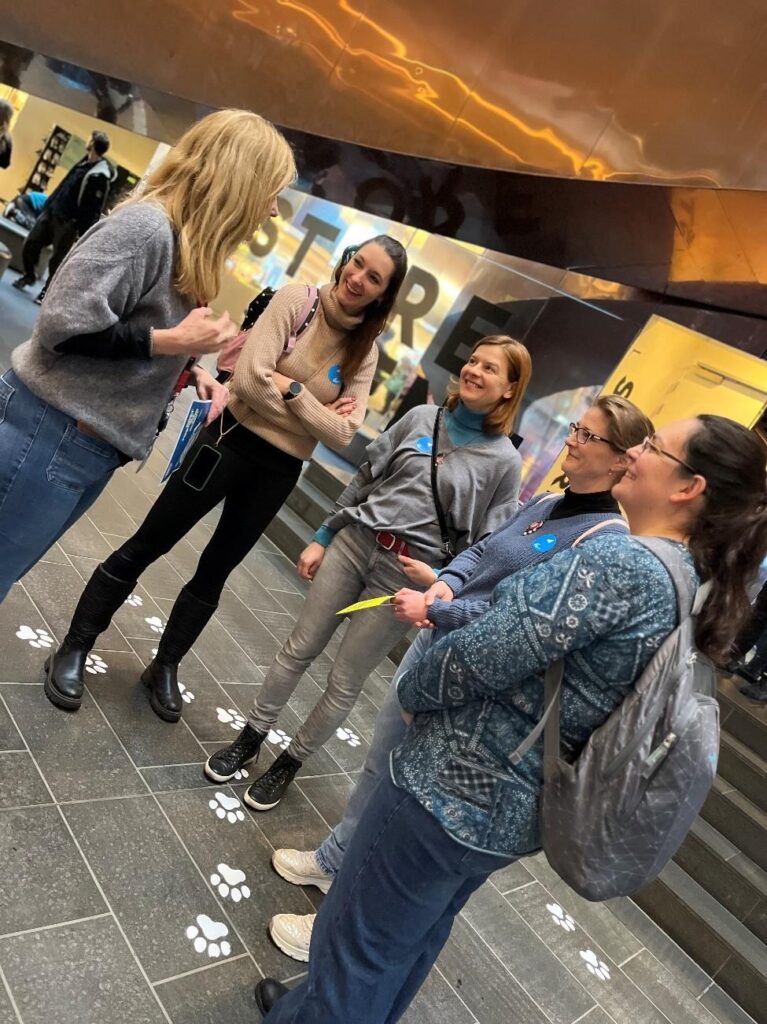
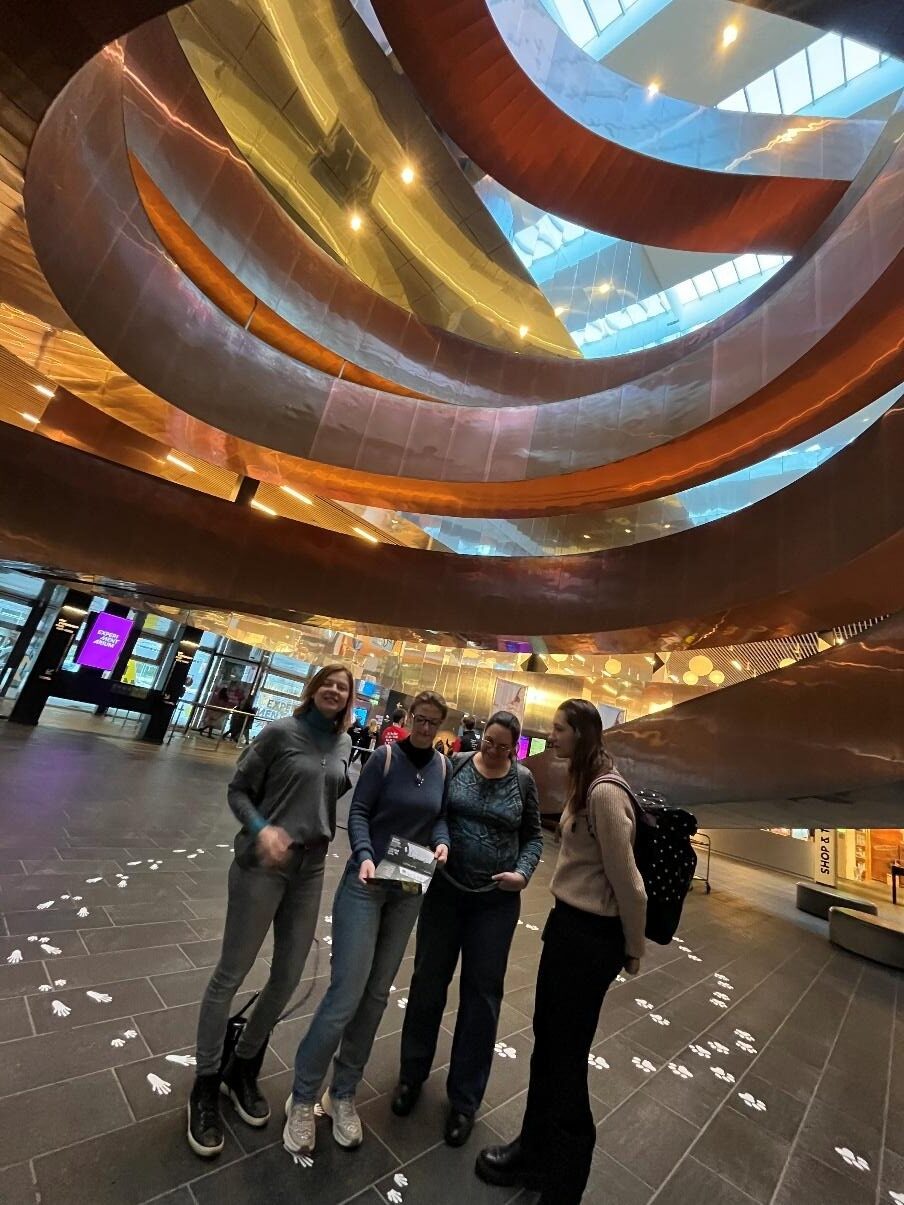
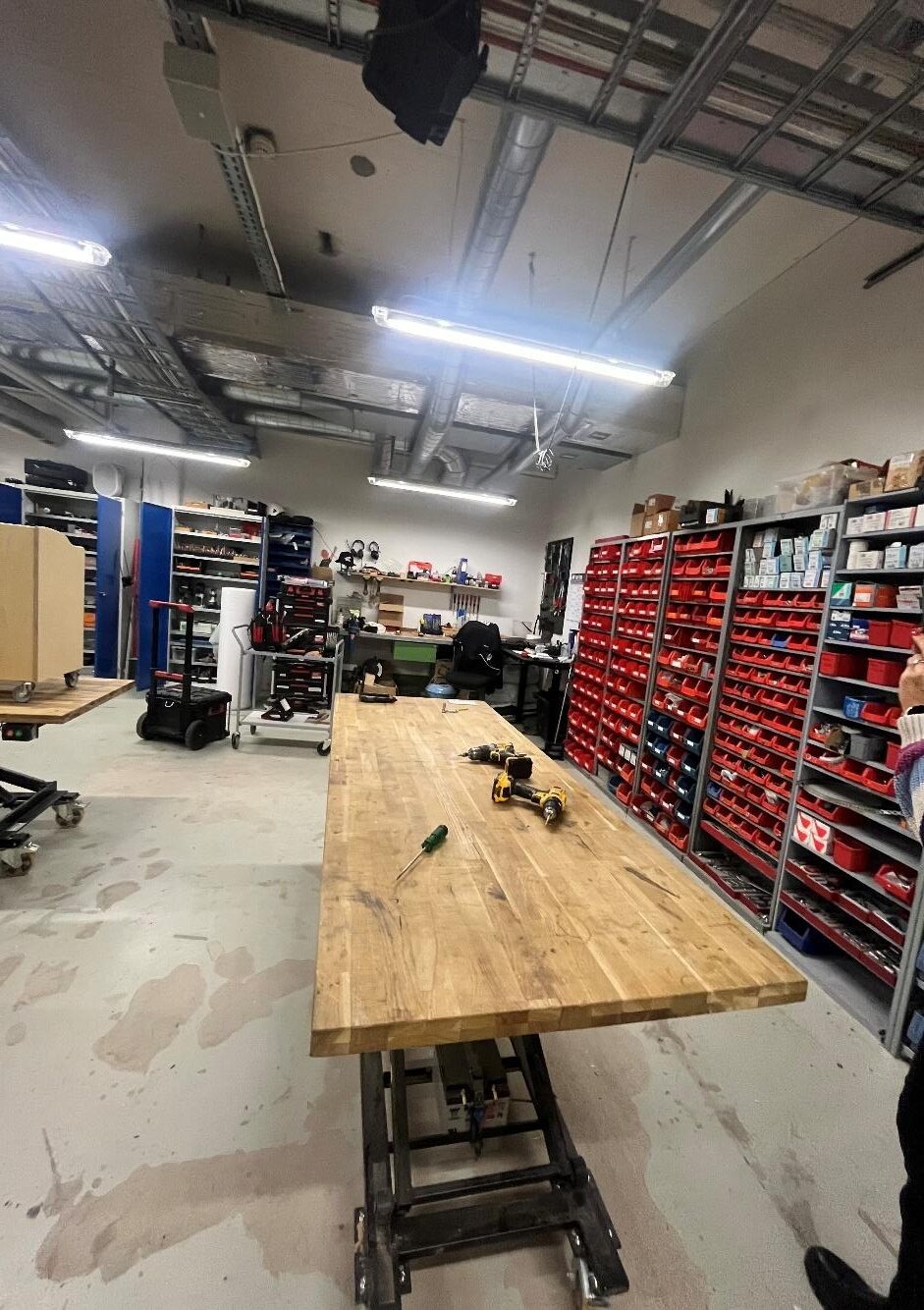
Together with a colleague from Experimentarium, we toured the entire backstage area of the building. It was fascinating to see that they manufacture their exhibitions and tools themselves. We passed workbenches full of exhibits, tools and screws, shelves with seasonal props, Christmas trees and summer equipment for water-based activities.
And of course, it would not be Denmark without bicycles among the equipment. There was even a cargo bike with a large front storage space used to transport exhibits and materials when Danish colleagues travel to kindergartens and children’s groups with mobile exhibits. We immediately thought:
“Actually, this could work in Pardubice as well – after all, we’re in a flat Labe region.” 😊
It was reassuring to see an organisation with a twenty-year history and realise that they face very similar joys, worries and challenges to the ones that we face.
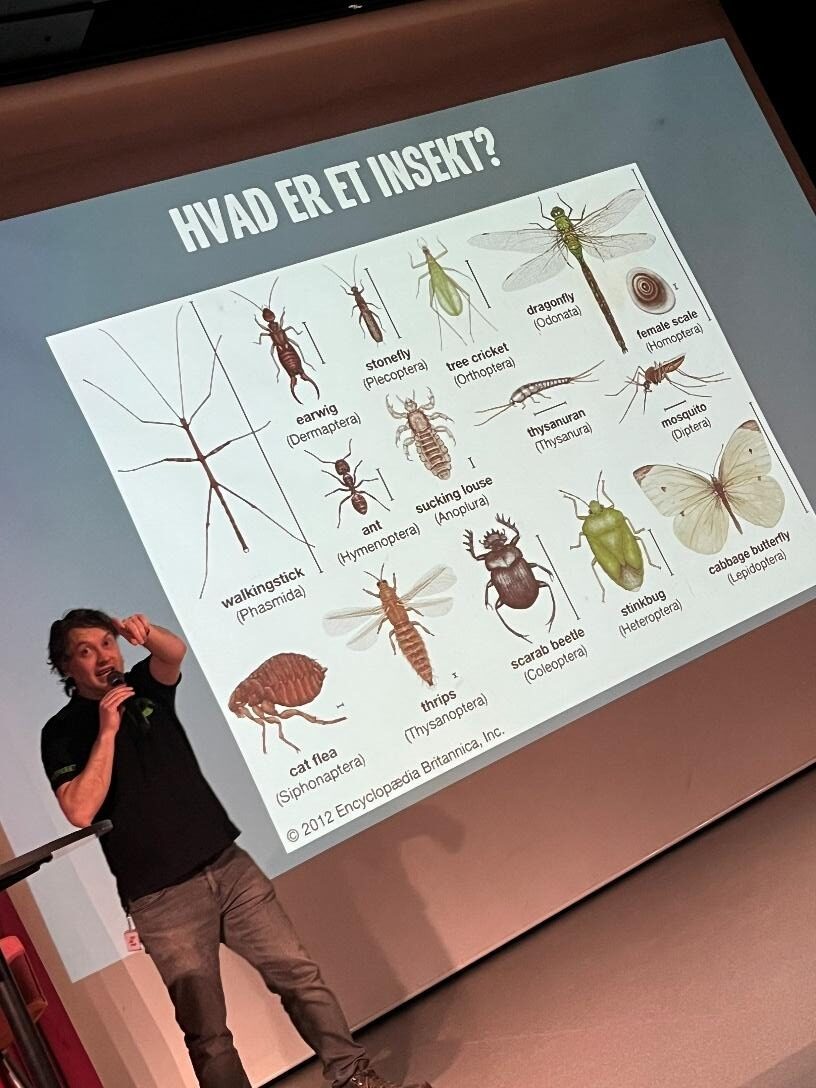
Experimentarium reflects the Danish approach to education. Danish families and individuals often spend an entire day there, exploring exhibits from A to Z. Our all-female group also spent two full days immersed in the space. We participated in workshops, tasted worms fried in a pan and baked biscuits made with worm flour. In Denmark, insects are discussed as food of the future, even with small children, quite matter-of-factly. It feels as if the whole society is already preparing for it.
We eventually brought the baked biscuits back to SFÉRA for tasting. They tasted perfectly normal. No surprise, as they contain standard ingredients such as flour, sugar and butter. Occasionally, when biting into them, you could see a worm. The biscuits were definitely higher in protein, that is beyond dispute.
We spent hours testing different stations in the building. We jumped, measured reaction times, solved puzzles, danced and walked barefoot through a plush forest. We had not experienced that much joy in a long time.
Meeting with the local team: We also had the opportunity to sit down at a round table with the local team and ask anything we wanted. We openly shared experiences and the everyday reality of running a science centre.
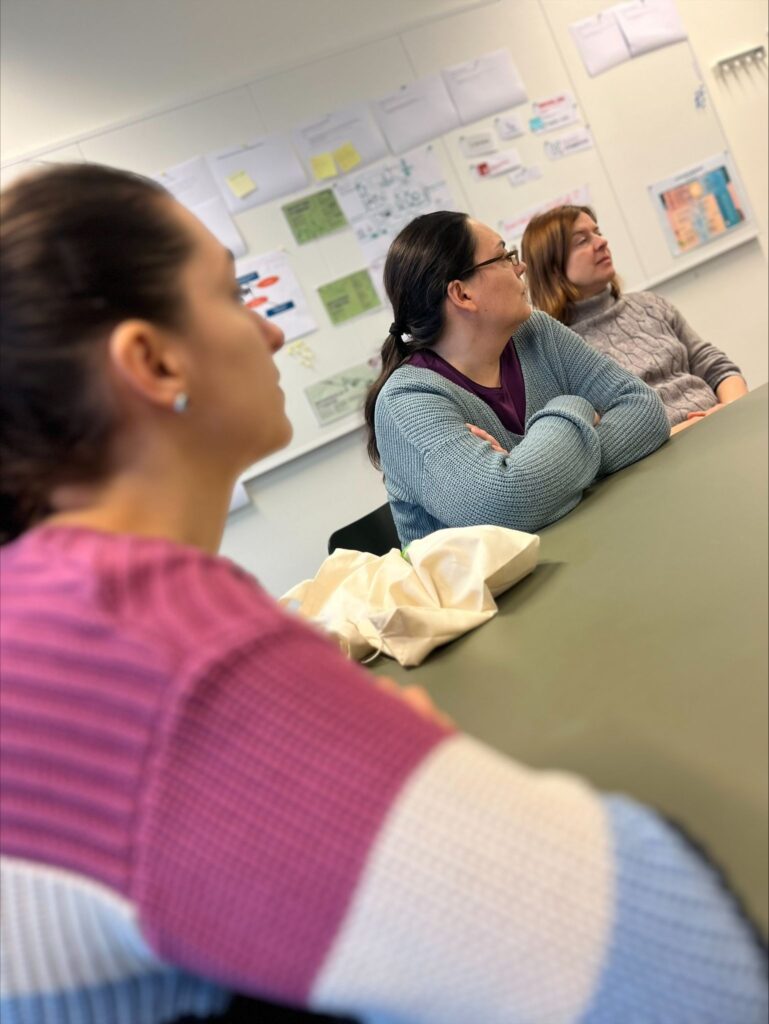
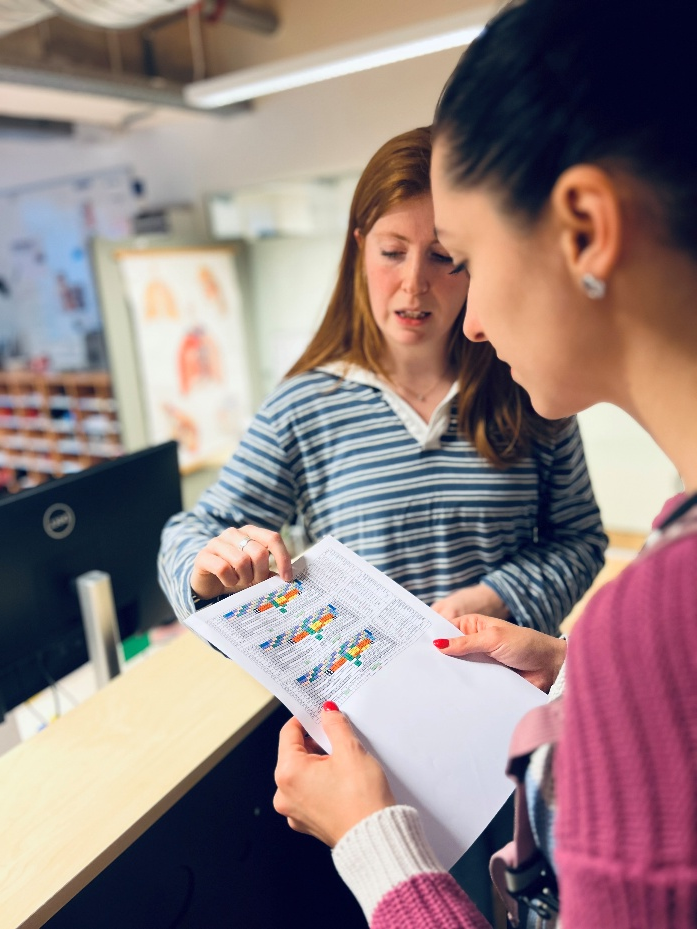
For example, we discovered that when planning activities they also rely on Excel spreadsheets, just like we do. We were surprised that hands-on craft activities are not very common in Denmark. At SFÉRA, by contrast, we work with real tools and materials: circular saws, sewing machines, metal, paints, technological equipment or even dry ice. Nothing is just for show.
Similarly, collaboration with technology companies is not as common in Denmark as we might have expected. Even though we have been operating for only two and a half years, we certainly did not feel behind.
Heart dissection – a powerful moment: A particularly strong moment came during a heart dissection workshop. The educator, wearing a white coat splashed with blood up to the shoulders, led a session where children worked with a pig’s heart without hesitation. We have a similar activity prepared at SFÉRA and are looking forward to seeing how schools will respond to it.
Merchandise: At SFÉRA we pay close attention to our merchandise. We want it to be more than just a generic souvenir, and it should reflect the mission of the organisation.
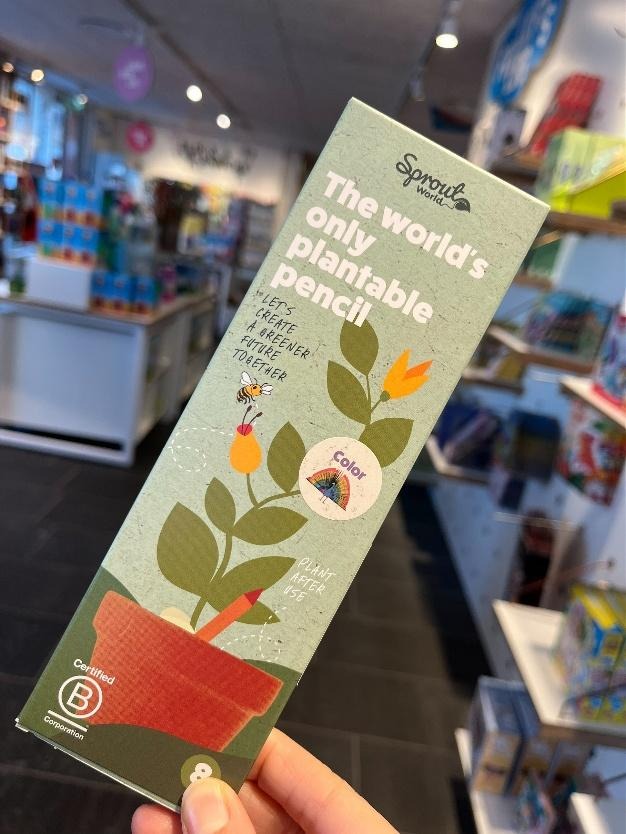
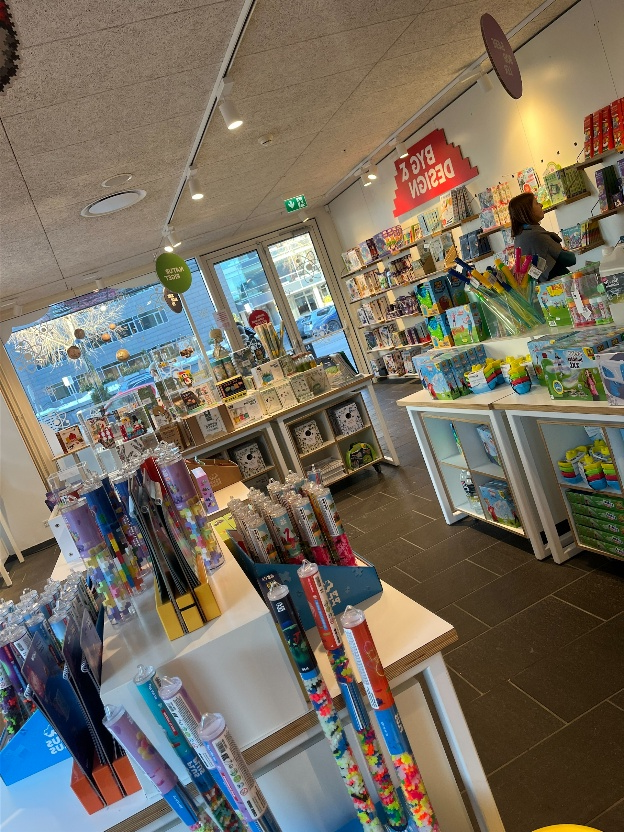
While travelling, especially in museums and science centres, we are often disappointed when the museum shop looks like a general toy store, full of unrelated souvenirs and products. In Denmark, however, we found several interesting ideas, often connected to space or sustainability. For example, pencils that grow herbs once they are too short to use. Simply plant them in soil, water them and give them time. Overall, we perceived the shop at Experimentarium as a mix of thoughtfully designed thematic products and items that felt more like standard toy-shop goods.
Den Blå Planet Aquarium and hands-on learning
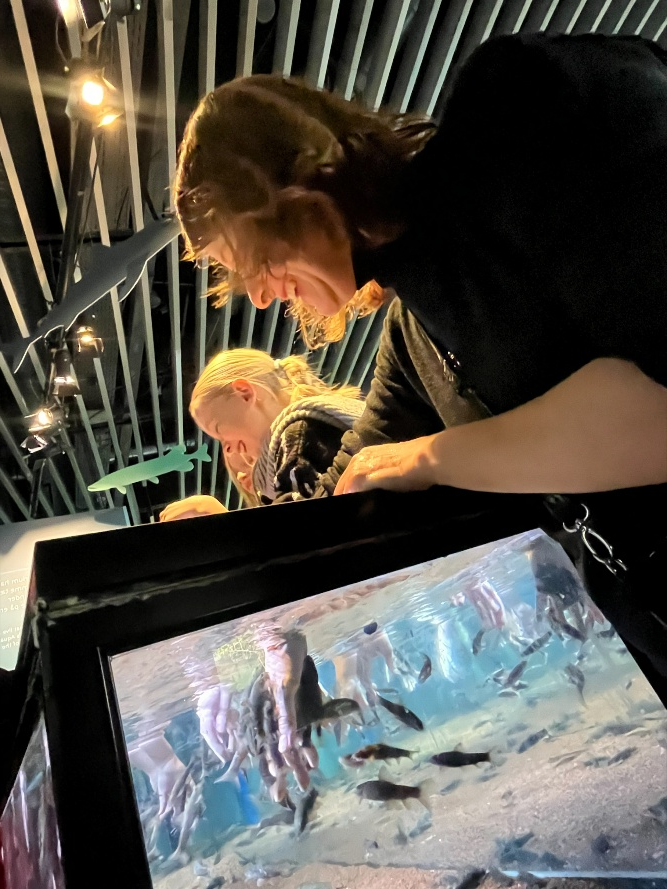
During the study trip we also visited Copenhagen’s aquarium Den Blå Planet (The Blue Planet). We touched rays, crabs, seaweed and starfish. Yes, we did wonder about whether it was entirely comfortable for the animals. But the moment when you touch a ray for the first time at the age of forty is unforgettable.
Once again, it confirmed for us that learning through touch and experience makes sense, and we will continue exploring this approach at SFÉRA.
A quick visit to the Tycho Brahe Planetarium
An unplanned yet very inspiring stop was the planetarium. The director welcomed us and shared her experience with us almost spontaneously. The space is interwoven with the installation Cosmic Threads by architect Tomás Saraceno, linking art, science and technology. The planetarium works with a sense of wonder, the feeling of human smallness in the universe and questions that go beyond facts.
We loved the connection between science and emotion. Questions such as: Are we alone in the universe? You truly feel that everything there touches you. This is something we would love to bring to SFÉRA as well.
To conclude…
During our five-day January stay in Copenhagen, we walked roughly sixty kilometres. At that time Europe was hit by a wave of cold air, and the wind showed no mercy.
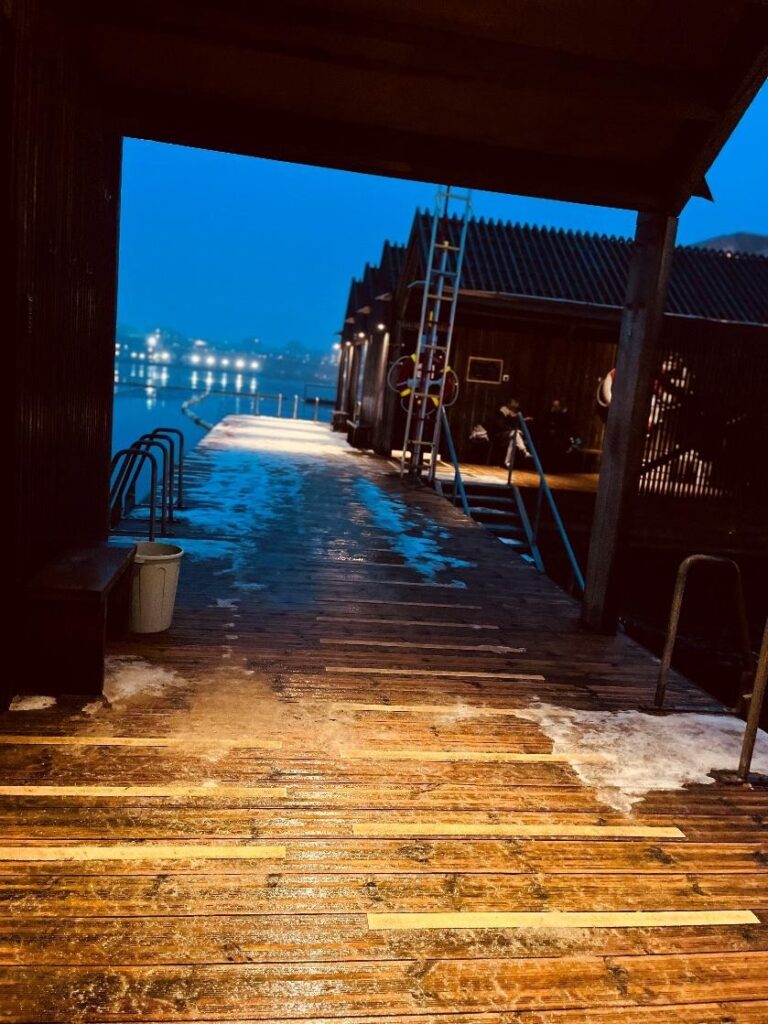
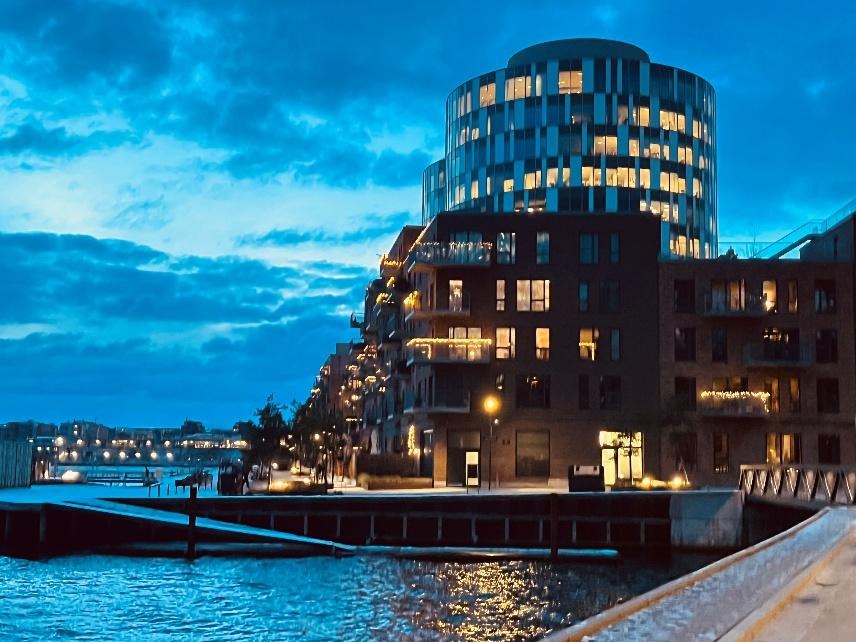
Yet hygge, the Danish concept of cosiness and wellbeing, was everywhere. Lights, the winter sea, snow mixed with sand, wooden piers disappearing into the water. Surprisingly to us, the place we enjoyed the least was Nyhavn, the iconic district in the city centre.
And the Little Mermaid? We saw her in daylight, at night, in snow and in rain. Each time she looked different.
And the cherry on top?
We gathered our courage and booked a session in a local sauna, a truly authentic experience. A wooden house on the sea with glass windows. It felt wonderfully calm.
The locals’ cold-water endurance is admirable and impressive. Nevertheless, in the end, we were not to be outdone and also stepped into the frozen sea.
We are bringing home both professional and personal inspiration: the energy of the country, insights into how science centres operate, and the collegial sharing that is so valuable for the development of our activities.
Thank you, Denmark.
Thank you, Copenhagen.

Tereza Všetečková
Tereza Všetečková works as the Marketing Manager at the SFÉRA Education Centre. She leads the creation and distribution of public-facing content, from social media and website management to content marketing and media relations. She also contributes to the production of photos and videos, their post-production, and the preparation of events and campaigns that present innovative educational projects to the public. In her work she combines creativity, strategic thinking and a sense for storytelling that helps demonstrate how modern informal education in the Czech Republic can inspire both children and adults.
Other experts participating in the described mobility programme wereHelena Drobná(coordinator of the physics/robotics laboratory),Markéta Sodomková(coordinator of the natural sciences laboratory),Karolina Kuhnová(coordinator of the Spherical Playground), andMichaela Scholzová(operations and events manager).